

For the past several years, hardware manufacturers marketed a very specific dream to the consumer public: a future of incredibly fast, perfectly automated, on-device artificial intelligence that runs entirely inside your personal laptop or mobile device. Buyers eagerly waited for mid-2026 flagship rollouts, ready to upgrade their baseline remote work setups and personal creative engines.
But a sudden, devastating supply chain bottleneck has transformed the new gadget release calendar into an absolute financial trap for consumers.
Dubbed “RAMageddon” by hardware analysts, a global crisis in memory-chip manufacturing is forcing tech giants to severely overcharge consumers for drastically underpowered machinery.
For the average consumer looking to buy a new laptop or phone right now, early adoption has officially become a massive personal finance mistake.
The On-Device AI Trap
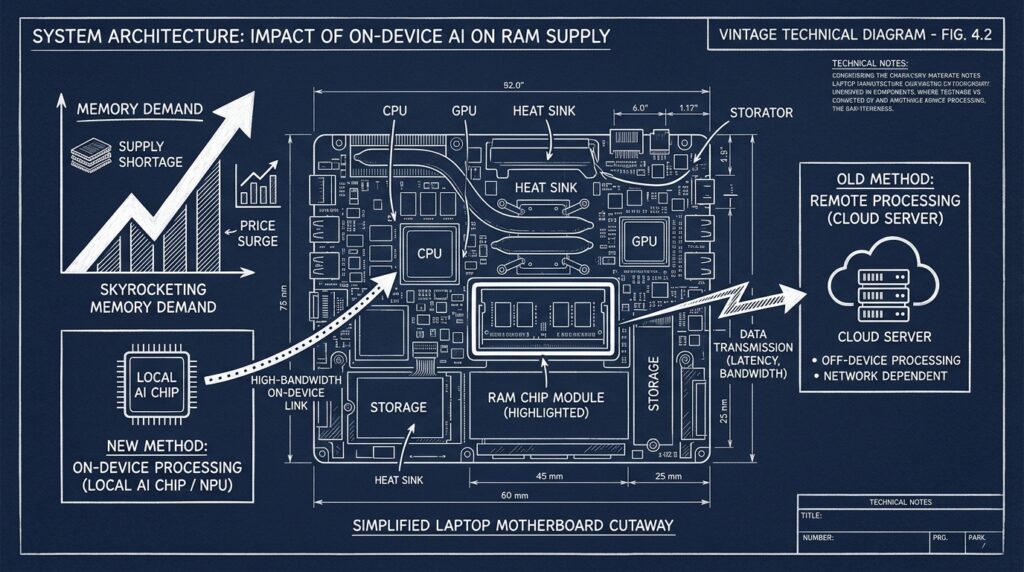
To understand how RAMageddon broke the consumer hardware market, you have to look at how modern software has evolved. Traditional applications process information using cloud-based remote servers. However, the newest generation of task-specific AI systems is built to run locally on your actual device to ensure privacy and low-latency processing speed.
The catch is that running these advanced language models locally requires an astronomical amount of high-bandwidth system memory (RAM).
As tech companies rushed to build automated features into their baseline laptops, the global demand for specialized memory chips instantly outstripped maximum supply chain production capabilities.
Enter RAMageddon: Shrinking Specs, Premium Prices
Instead of delaying product launches, hardware manufacturers implemented a highly frustrating, margin-protecting strategy: they are continuing to release premium flagship devices while quietly cutting baseline memory specifications to the bare minimum.
Consumers across the United States, United Kingdom, and Canada are opening up their wallets for $1,500+ premium laptops, only to discover the machines are shipping with outdated memory limits that cause automated background apps to completely freeze and stutter.
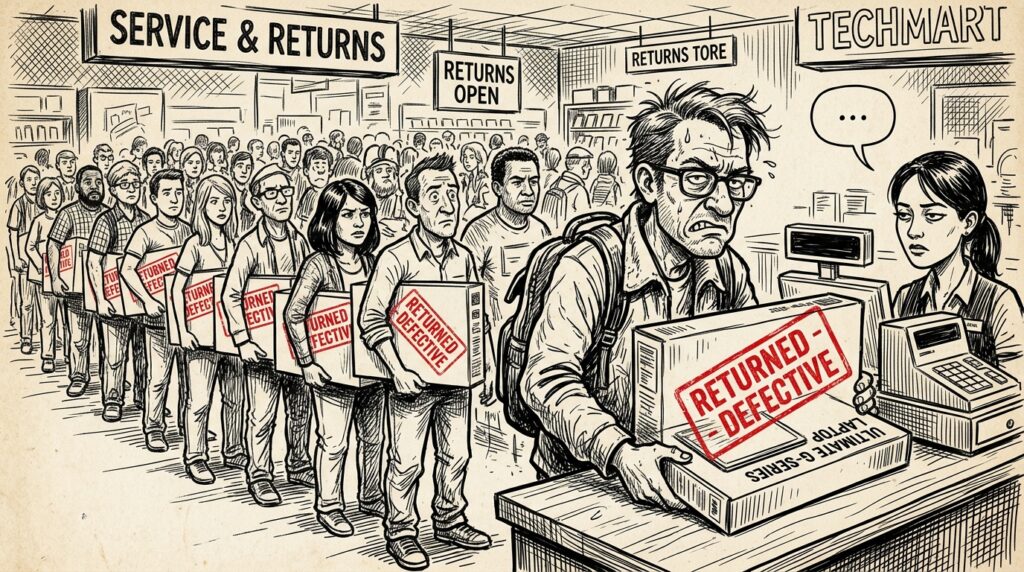
To get a device that actually possesses enough processing muscle to handle modern tasks smoothly, buyers are being forced into predatory, high-tier pricing brackets. This artificial hardware inflation has caused an immediate decline in consumer trust. Retail registries indicate a sharp spike in return rates, as early adopters face massive buyer’s remorse over spending premium cash on devices engineered to become obsolete almost immediately.
The Smart Money Move
This hardware deficit is forcing financial advisors to issue a rare warning: do not upgrade your computer infrastructure this year unless it is an absolute emergency. The logical move for smart consumers is to skip the current retail cycle entirely and protect their savings.
As supply chain networks adjust and automated software becomes more resource-efficient over the coming quarters, the current pricing crisis will inevitably break. Until the market stabilizes and baseline hardware specs match their premium retail price tags, keeping your cash firmly in your bank account is the most sophisticated tech strategy you can deploy.

Have you noticed your laptop or phone struggling to keep up with recent automated software updates? Are you planning to boycott the current gadget cycle until prices drop? Drop your city, state, or province below and let’s check the specs!