
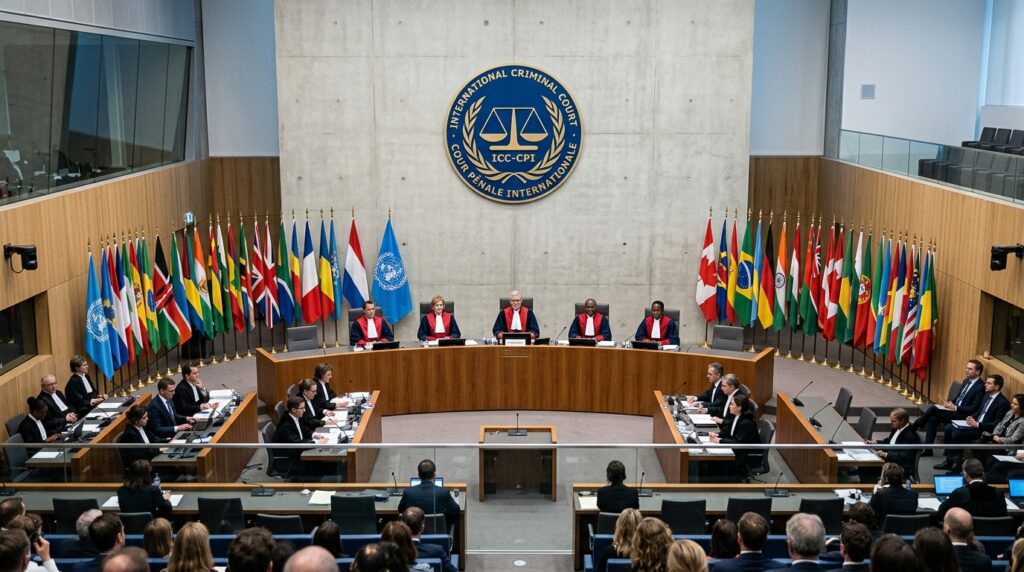
For over two decades, the International Criminal Court (ICC) in The Hague operated as the world’s primary permanent tribunal of last resort, established under the Rome Statute to prosecute individuals for war crimes, genocide, and crimes against humanity. Built to challenge the culture of global impunity, the court relied on the cooperation of more than 120 member states and international law enforcement frameworks to hold political and military figures accountable.
However, mid-2026 developments have pushed the tribunal into an unprecedented institutional crisis, sparking an aggressive geopolitical confrontation between supranational legal bodies and major world superpowers.
A direct diplomatic collision has escalated following sweeping foreign sanctions targeting senior ICC officials—including the court’s sitting President and trial prosecutors—freezing assets and restricting their participation in the global financial system.
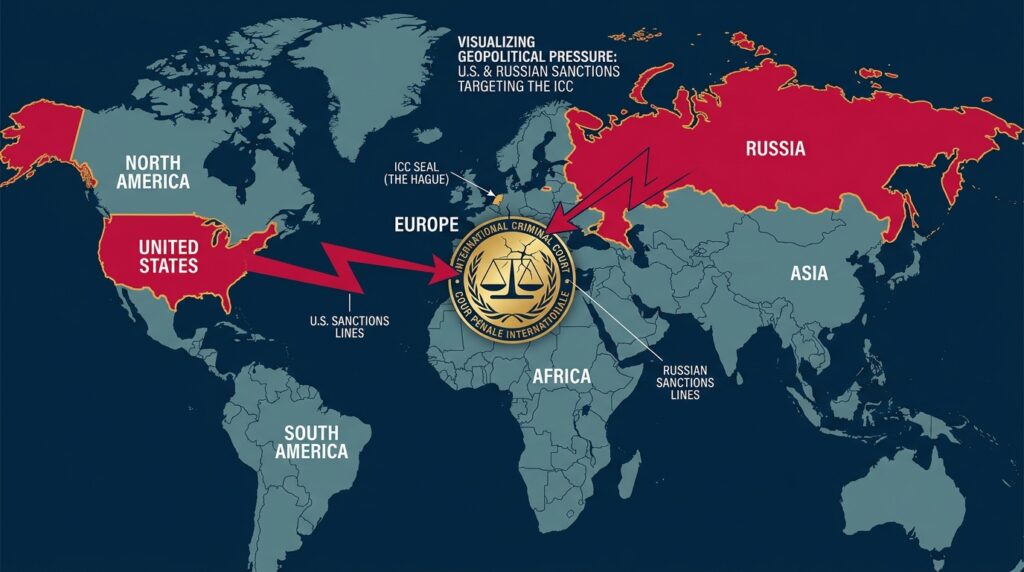
Superpower leaders argue that the court has maliciously exceeded its legal mandate by attempting to assert supranational jurisdiction over citizens and leadership of non-signatory nations without sovereign consent.
The Conflict Over Sovereign Jurisdiction
The fundamental clash threatening the tribunal stems from conflicting interpretations of territorial jurisdiction and national sovereignty:
- The ICC asserts legal authority to investigate and prosecute grave crimes committed within the physical territory of its State Parties, regardless of the accused party’s nationality.
- Non-member states reject this framework, asserting that unelected international judges cannot exercise legal authority over nations that never ratified the Rome Statute.
- The weaponization of unilateral economic sanctions and travel bans against sitting judges represents a direct effort to financially and logistically dismantle the court’s operational machinery.
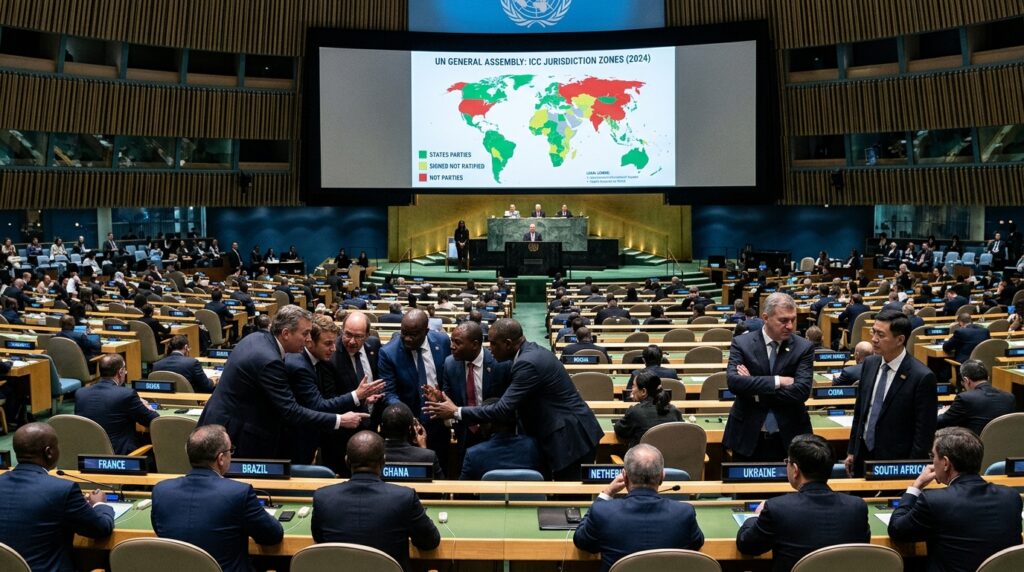
This standoff has created deep global friction, placing the United Nations and sovereign member states in the middle of a high-stakes battle over whether international law can function independently of superpower influence.
High-Profile Cases and Regional Fallout
The geopolitical pressure on The Hague arrives at a pivotal moment, as the ICC actively navigates several of the most consequential legal proceedings in modern history. The court’s ongoing trials and unsealed warrants—ranging from state leadership in the Middle East and Eastern Europe to historic proceedings involving former state leaders in the Asia-Pacific—have turned the institution into a geopolitical battleground.
Member nations that balance domestic treaty obligations with key foreign defense alliances find themselves navigating a delicate diplomatic tightrope.
While international human rights organizations emphasize that shielding officials from legal scrutiny severely undermines justice for victims, critics argue that a tribunal unable to enforce decisions without provoking superpower retaliation risks total systemic collapse.
The Future of Global Accountability
The outcome of this confrontation will determine the entire trajectory of 21st-century international justice. If unilateral sanctions succeed in paralyzing tribunal operations, the concept of independent supranational accountability will suffer an irreversible defeat, shifting the global order back toward pure bilateral power dynamics.
Until member states establish resilient frameworks to insulate international legal bodies from diplomatic pressure, the tension between sovereign state rights and universal human rights enforcement will remain one of the most volatile flashpoints on the world stage.
[SOURCES & VERIFIED DOCUMENTATION FOR READERS]:
- United Nations Information Service: Statements on Judicial Independence & International Tribunals (August 2026)
- International Criminal Court (ICC) Registry: Official Statements on State Party Cooperation & Legal Mandates
- Global Human Rights & International Justice Coalition: Case Tracker and Sovereign Jurisdiction Review
Do you believe the International Criminal Court should have the authority to put leaders of non-member nations on trial, or does that violate sovereign independence? How should the global community resolve this clash? Drop your city, state, or country below and share your perspective!