
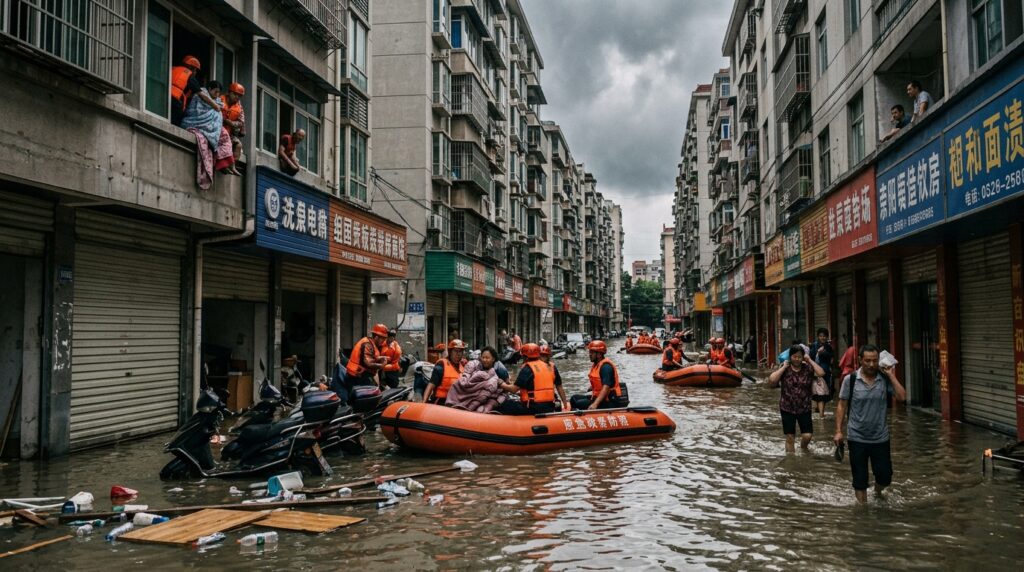
The baseline operational hazard of heavy tropical storm seasons typically revolves around regional power outages, severe structural water damage, and rapid emergency evacuations. Emergency management networks across coastal regions build robust response frameworks designed to process rising water levels and secure displaced residents.
But a sudden, highly volatile disaster following the landfall of Typhoon Maysak has introduced a completely unprecedented public safety crisis in southern China.
The catastrophic failure of a medium-sized water infrastructure asset didn’t just flood an entire municipal region—it simultaneously unleashed a massive ecosystem anomaly into the streets.
According to official state media registries published by Xinhua, the rapid inundation of the Liulan Reservoir in Hengzhou city culminated in a sudden dam breach, sending massive torrents of muddy water directly into nearby residential sectors.
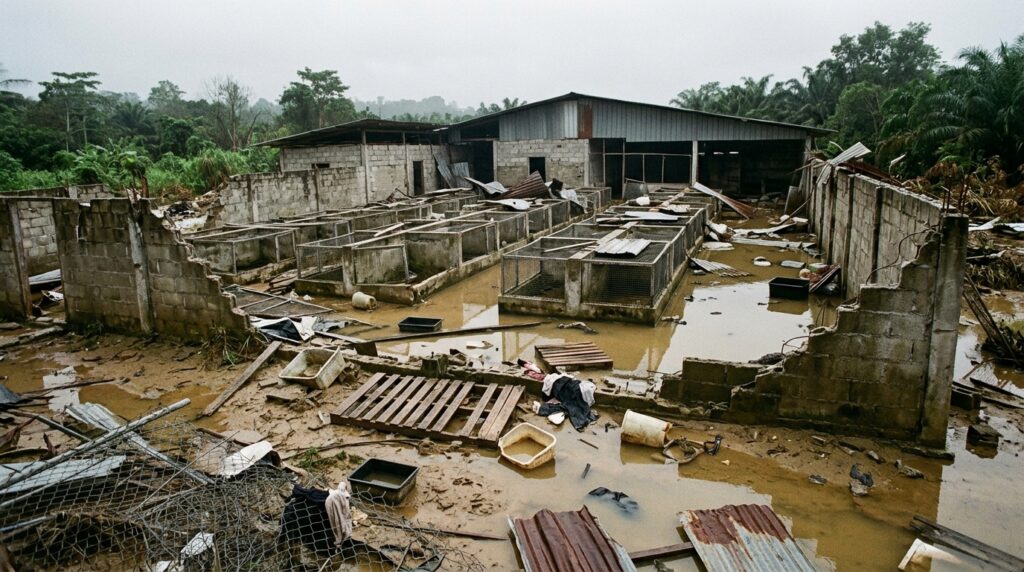
The Escape of the Breeding Farms
While rescue crews aggressively deployed inflatable boats to retrieve trapped citizens from swamped households, a secondary emergency erupted down the line. The sheer force of the fast-flowing reservoir overflow completely collided with a specialized commercial agricultural zone, obliterating the containment perimeters of a local snake breeding facility.
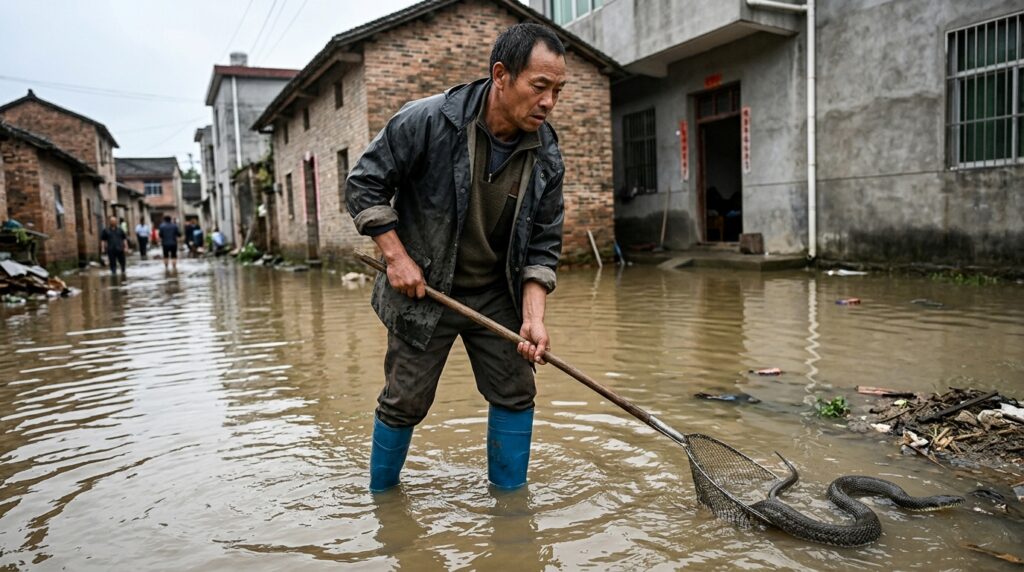
Local administrative data confirmed that between 800 and 900 snakes were instantly swept up by the moving currents and carried straight into the knee-deep waters of the neighboring town.
The resulting scene has transformed a standard natural disaster recovery into a hyper-viral online phenomenon, with related digital media hashtags rapidly surpassing 180 million views.
Instead of merely wading through local streets to protect dry property, entire village committees have been forced to organize ad-hoc capture teams, using specialized nets and their bare hands to pull slithering reptiles out of the silt-heavy floodwaters before they can settle into local homes.
A Multi-Front Climate Crisis
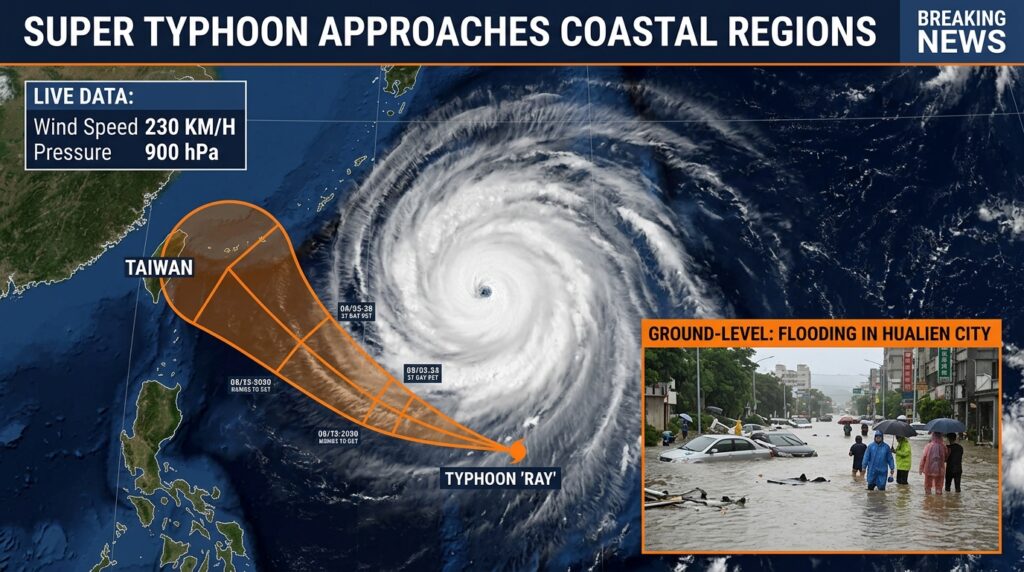
The structural failure at the Liulan Reservoir highlights the severe strain that back-to-back convective weather systems are placing on regional civil infrastructure. Meteorological data indicates that northern and southern corridors are simultaneously enduring historically unstable wind and rain patterns, with severe twin tornadoes simultaneously striking the industrial and automotive manufacturing sectors of Hubei province farther inland.
To complicate global supply chain logistics, international weather tracking arrays have confirmed that Super Typhoon Bavi—a severe Category 4 equivalent storm system packing maximum sustained winds of 250 km/hr—is actively advancing across the Pacific toward eastern coastal hubs.
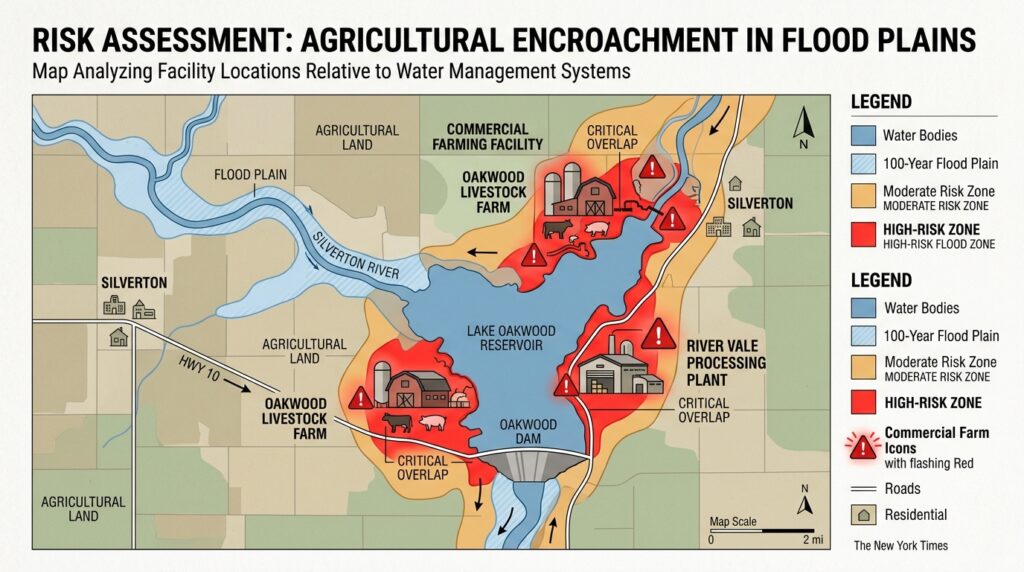
The convergence of successive infrastructure failures and severe wildlife escapes is forcing municipal planners to completely re-evaluate the resilience of specialized farming assets situated within active flood plains, proving that the secondary consequences of climate volatility can frequently outpace the initial storm warnings.
[SOURCES & VERIFIED DOCUMENTATION FOR READERS]:
- Bureau of Hydrological Infrastructure Audits: Liulan Reservoir Case #2026-T7
- International Severe Weather Tracking Registry: Typhoon Maysak Impact Analysis
- Southern China Agricultural Asset Registry: Facility Loss Log #800-900
Would you stay behind to help protect your neighborhood if a local flood suddenly carried hundreds of wild reptiles into your street? Do you think heavy commercial breeding facilities should be legally banned from operating inside active flood plains? Drop your city, state, or province below and let’s check the data!