
France is assessing widespread damage after nationwide demonstrations on October 17 turned violent in several cities, with authorities reporting mass arrests, injured police officers and firefighters, looted shops, and damage to public buildings.
The demonstrations began amid anger over school conditions and teacher shortages before expanding into a broader movement against rising living costs, inequality, public spending cuts, and declining public services.
Reuters reported on October 18 that nearly 1,800 people had been arrested nationwide. Authorities also reported that more than 500 police officers were injured. While hundreds of thousands of people participated in demonstrations, violent groups were responsible for attacks and looting in several locations.
What happened during the protests?
The demonstrations brought together people expressing concerns about the cost of living, education, inequality, and the quality of public services. Student grievances over teacher shortages and school conditions had helped trigger the movement in previous weeks.
As the protests spread, many participants marched peacefully. However, separate groups clashed with police, damaged property, set fires, and looted businesses in multiple cities.
Reuters reported damage in cities including Paris, Bordeaux, Marseille, Lille, Strasbourg, and Limoges. The extent of the destruction has prompted cleanup operations and calls for financial support for affected businesses.
Nearly 1,800 arrests reported nationwide
French authorities reported approximately 1,800 arrests across the country by Sunday, October 18. Paris accounted for 855 arrests, a record for the capital region according to police figures cited by Reuters and the Associated Press.
The Associated Press reported that authorities estimated approximately 550,000 people took part in demonstrations nationwide. Organizers put the number at about 800,000. These are different estimates from different sources, rather than a single agreed attendance figure.
Interior Minister Laurent Nuñez said more than 500 police officers, gendarmes, and firefighters had been injured. The figures were reported by authorities as the country assessed the aftermath.
Historic Limoges City Hall severely damaged by fire
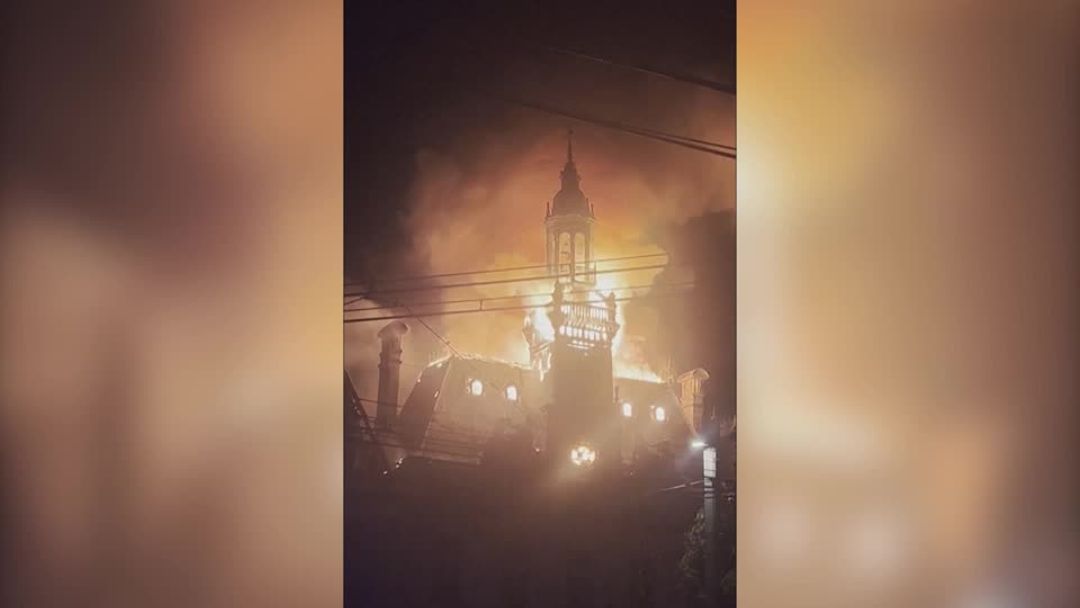
One of the most serious incidents occurred in Limoges, where a fire partially destroyed the city’s historic town hall. The building, which dates back 143 years, suffered extensive damage after being set ablaze during the unrest.
Local officials condemned the attack and raised concerns about the cost of restoring the building. The incident has become one of the most visible examples of the damage caused during the protests.
Authorities said the fire was deliberately set. The incident is being treated as a serious attack on public property, and responsibility should be established through investigation rather than assumptions about every protest participant.
One demonstrator died during the unrest
Reuters and the Associated Press reported that one demonstrator died after suffering a cardiac arrest during demonstrations in Paris. Police reported the death, and prosecutors were investigating. Available reporting does not establish that the person’s death was directly caused by police action or a specific violent incident.
This distinction matters when reporting developing events. The timing and circumstances of a death should not be confused with a confirmed cause unless investigators establish one.
Why are people protesting?
The movement grew from complaints about school conditions and teacher shortages in working-class suburbs. It then broadened into a wider expression of dissatisfaction with living costs, inequality, public spending decisions, and the state of public services.
These issues have placed additional pressure on President Emmanuel Macron’s government as France approaches its next presidential election in 2027.
Government officials blamed violent incidents on criminal groups and radical factions. Those characterizations are political and official assessments; they should be attributed to the officials making them rather than treated as proven descriptions of all protesters.
Businesses and public services face the aftermath
Several hundred shops were reported damaged, with looting affecting businesses in multiple cities. Reuters reported that Bordeaux’s mayor estimated up to 100 stores had been looted in the city. Carrefour’s chief executive also said dozens of the retailer’s stores had been damaged, including some that were looted.
Local authorities began cleanup efforts and discussed financial assistance for affected businesses. The full cost of repairs and disruption was still being assessed in reports published on October 18.
What happens next?
France now faces the task of restoring damaged areas, investigating crimes, supporting affected businesses, and responding to the concerns that brought demonstrators into the streets.
The government must also distinguish between the right to peaceful protest and criminal acts such as arson, assault, and looting. The scale of participation shows that the demonstrations reflect broad public concerns, but violence has become a major part of the immediate political and public-safety crisis.
The bottom line
France is dealing with one of its most serious episodes of unrest in years. The demonstrations reflect growing anger over living costs and public services, while violence in several cities has led to mass arrests, injuries, looting, and major damage to public buildings.
The situation remains developing. Arrest totals, damage estimates, investigations, and the government’s response may change as more information becomes available.
Watch and read more
- Reuters: France counts cost of worst unrest in years
- Associated Press: French police arrest 1,800 after violent clashes and looting mar protests
- Al Jazeera: Latest France news and video reports
Reporting note: This article reflects information published by Reuters and the Associated Press on October 18, 2026. Figures and official assessments may change as investigations continue.