
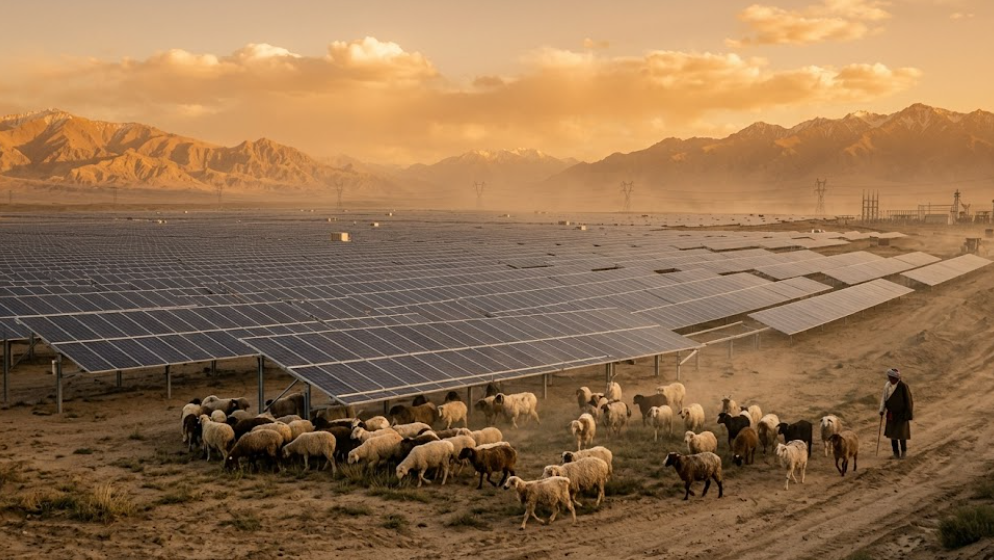
When engineers designed the massive Gonghe solar park in China’s Qinghai province—a multi-billion dollar project spreading across miles of arid, semi-desert landscape—they expected to fight wind, dust, and intense heat. What they never expected to fight was a runaway invasion of wild grass.
The massive solar project was built to harvest clean energy from the desert sun. However, the installation of millions of solar panels inadvertently triggered an unexpected ecological chain reaction.
The project created a high-tech oasis, and with it, a massive financial headache that threatened to defeat the entire economic purpose of the solar farm.
The Accidental Microclimate
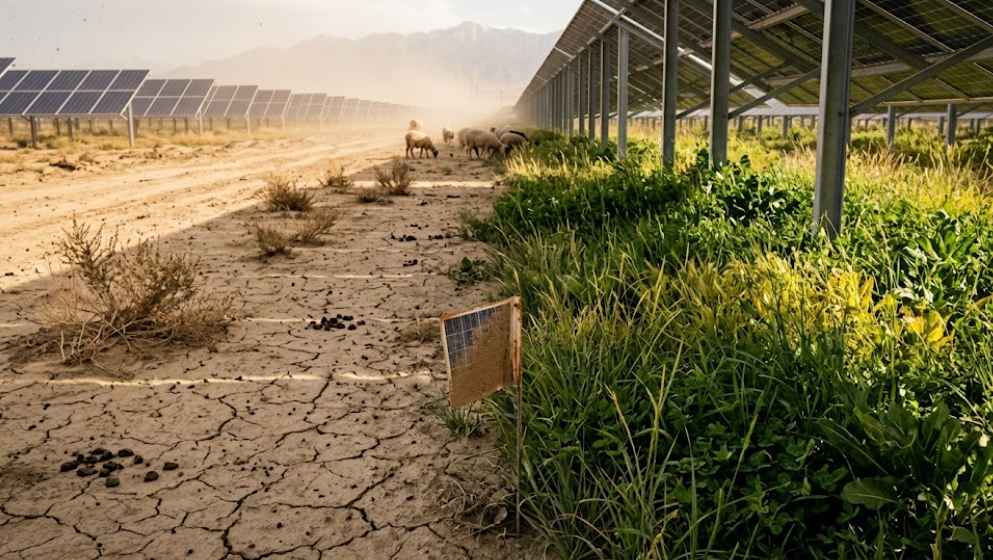
Desert soil is typically barren due to two factors: intense, direct sunlight that bakes the ground, and a complete lack of moisture. The construction of the solar array instantly solved both problems for the local flora.
First, the massive fields of solar panels provided constant shade, cooling the desert floor and reducing soil evaporation. Second, to keep the solar panels operating at maximum efficiency, maintenance crews had to regularly wash them with thousands of gallons of water. That runoff water dripped directly off the edges of the panels into the newly shaded, cooled desert dirt.
Almost overnight, a lush, aggressive carpet of wild grass began to sprout across thousands of acres of sand.
The Budget-Breaking Green Threat
While a green desert sounds like an environmental victory, for solar engineers, it was a catastrophe. The grass grew so rapidly and so tall that it began to cast shadows over the lower edges of the photovoltaic panels, severely cutting their power generation capabilities.
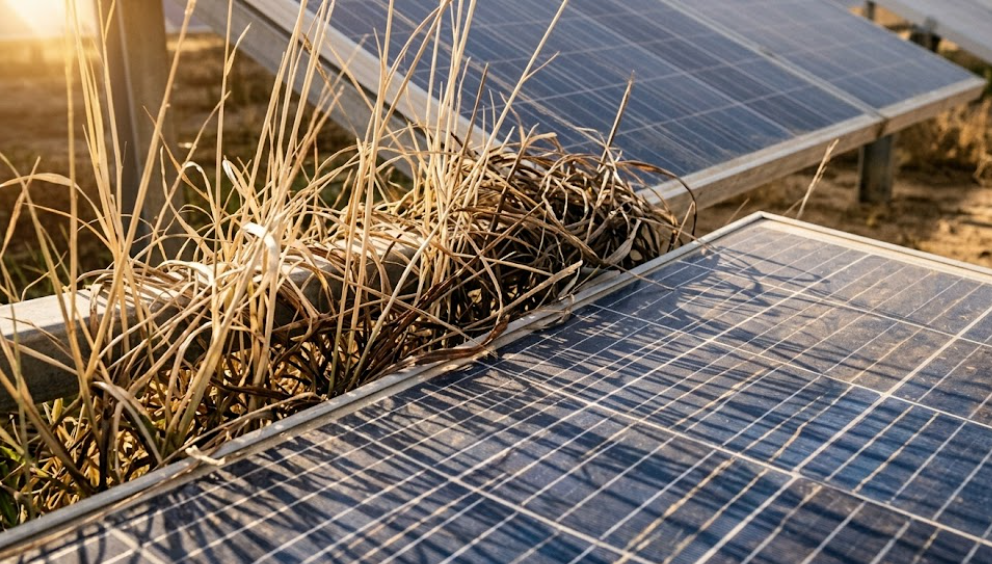
Even worse, during the dry season, the dense, overgrown weeds turned into dry tinder, creating a catastrophic fire hazard that could wipe out billions of dollars in technology with a single spark.
Initially, management attempted to solve the problem using human labor. They hired massive crews of maintenance workers to manually cut, weed, and clear the grass every single day. However, the sheer scale of the solar farm made manual maintenance an endless, exhausting cycle. The cost of labor and weed-clearing equipment skyrocketed so high that it began to wipe out the financial returns generated by the clean energy, completely defeating the economic goal of the project.
Enter the “Solar Sheep”
Realizing that human maintenance was a financial dead end, the project operators implemented a brilliantly low-tech, sustainable solution: they partnered with local shepherds and unleashed thousands of sheep into the solar fields.
The animals proved to be the ultimate solar maintenance crew. Because the panels were raised several feet off the ground to catch optimal sunlight, the sheep could easily graze underneath the structures, keeping the grass perfectly trimmed without damaging the sensitive wiring or equipment.
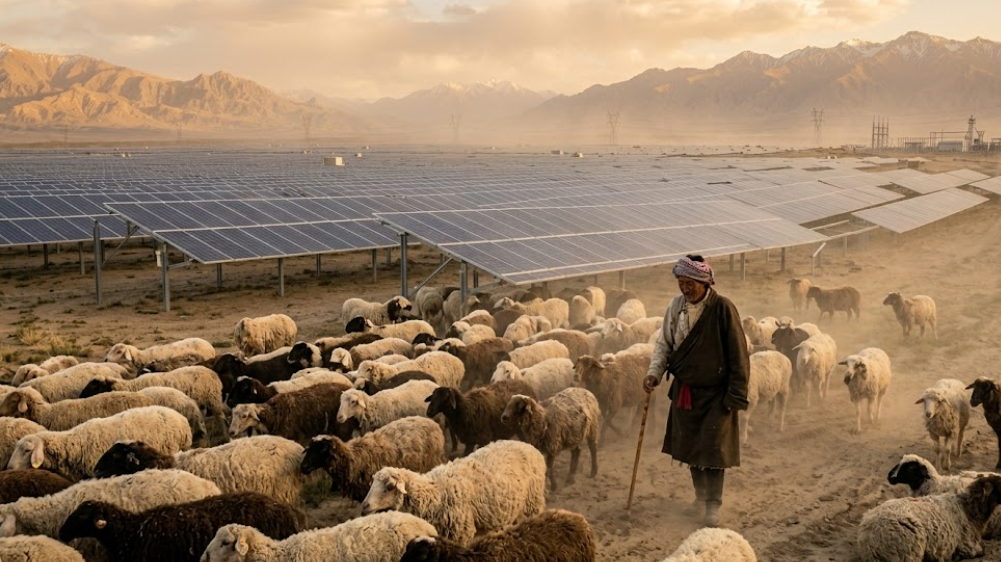
The results were immediate and staggering. The “solar sheep” slashed the facility’s weed-clearing and maintenance costs by over 70%, immediately restoring the financial viability of the solar farm.
Furthermore, the partnership created a highly profitable circular economy. The local shepherds received free, protected, highly nutritious grazing land for their livestock, which significantly boosted the quality of their wool and meat, bringing new income to the surrounding rural communities. Today, what began as a multi-million dollar engineering blunder is celebrated globally as one of the most efficient examples of “agrivoltaics”—the co-development of solar energy and traditional agriculture.
Is this the most brilliant low-tech fix you’ve ever seen for a high-tech problem? Do you think North American solar farms should start hiring local livestock instead of using heavy lawnmowers? Drop your city, state, or province below and join the debate!