
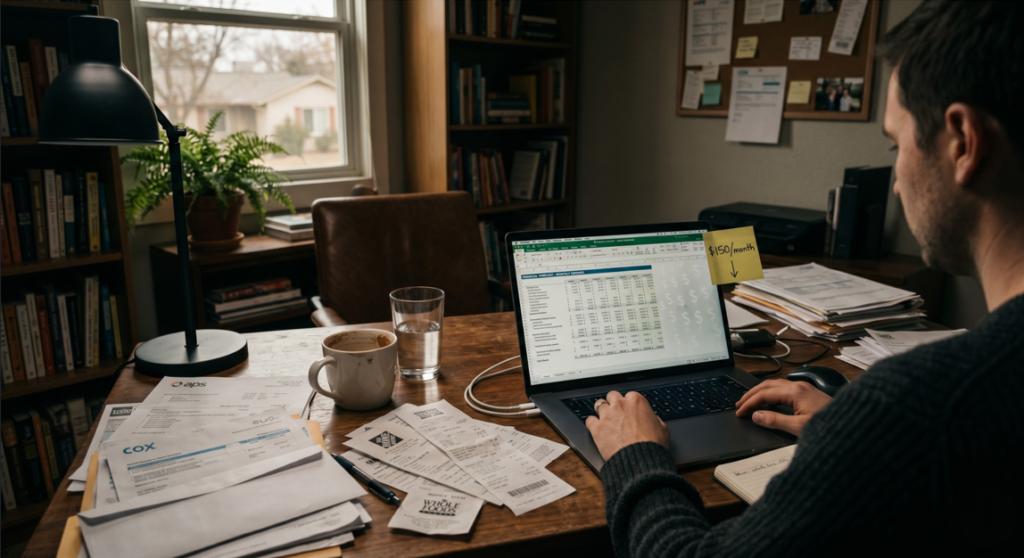
For the past few years, working from home has been marketed as the ultimate financial savior for the American worker. On paper, the math makes perfect sense: you eliminate the grueling daily commute, skip the expensive city center parking, and completely cut out the temptation of $1 office lunches.
But as millions of remote professionals enter another year at their home desks, a quiet financial shift is happening under the radar. Recent consumer spending reports indicate that remote employees are falling victim to “phantom bills”—hidden, incremental household expenses that are quietly draining up to $1,800 a year from their bank accounts.
If your monthly budget feels tighter despite staying home, here are the hidden leaks you need to look for immediately.
1. The Secondary Grid Surge (The Real Cost of HVAC)
When you go into a physical corporate office, your employer foots the bill to keep the lights on, the servers running, and the climate perfectly controlled for eight to ten hours a day. When you transition to remote work, you absorb those industrial utility burdens into your personal residence. Keeping a central air conditioning unit running or running a heating system through a bitter winter afternoon changes your household energy baseline dramatically. Data from energy grid analysts shows that full-time remote setups spike average household residential power consumption by 15% to 22%. Because US electricity rates have climbed steadily, this single shift adds a quiet $40 to $80 a month to standard utility statements.
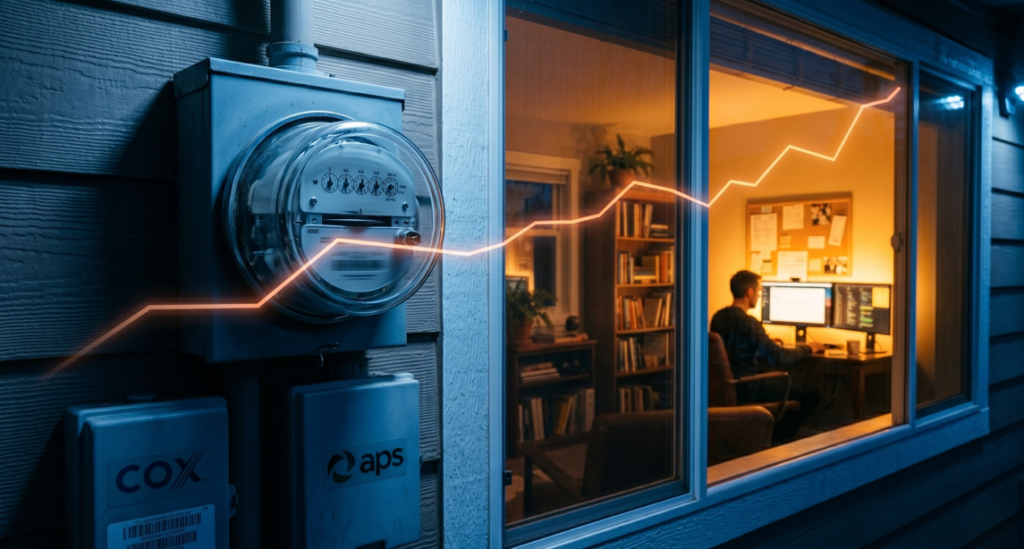
2. The Unseen Electronic Background Drain
A standard home office setup typically requires a laptop, one or two external monitors, a high-speed router, a printer, and charging docks for multiple mobile devices. While a single laptop charger doesn’t consume massive amounts of power, the aggregate “vampire draw” of multiple devices left plugged into power strips 24/7 adds up. Furthermore, many remote workers find themselves upgrading to premium, high-tier fiber internet speeds ($30+ more per month than standard streaming plans) simply to prevent their Zoom calls from dropping during critical team syncs.
3. The “Proximity Snacking” Inflation Loop
One of the most heavily documented phantom expenses isn’t electronic—it’s dietary. Psychologists refer to it as “proximity eating.” When your workspace is located exactly twenty steps away from your kitchen refrigerator, behavioral patterns change. Instead of eating a structured lunch packed the night before, remote workers are statistically prone to high-frequency micro-snacking throughout the day to break up monotony or relieve screen fatigue. With grocery prices climbing significantly across the US, these extra mid-day premium snacks, premium coffee pods, and specialized sparkling waters easily inflate a weekly grocery bill by $20 to $30.

How to Reclaim Your Missing Cash Flow
You don’t have to pack up your home office and head back to a cubicle to stop the bleeding. Reclaiming your remote budget just requires a few tactical financial adjustments:
- Audit Your Power Grid: Invest in smart, programmable power strips that automatically cut electricity to monitors and docks when your laptop goes to sleep.
- Claim Your US Tax Deduction: If you are self-employed or a contract freelancer in the United States, ensure you are utilizing the IRS Simplified Home Office Deduction. This allows you to write off $5 per square foot of dedicated workspace (up to $1,500 annually) directly against your tax burden.
- Create a Workspace Boundary: Treat your kitchen like an off-site restaurant during working hours. Pack a designated lunch box in the morning and stick to it to break the high-cost proximity eating cycle.