
Cebu is turning to desalination as one way to strengthen its water supply ahead of a potentially severe El Niño. Existing facilities are already treating seawater or brackish water, while the provincial government is considering portable desalination machines for emergency use.
But an important question remains: Can desalination plants prevent water shortages across Cebu, or are their benefits limited by capacity, location, cost, and distribution?
Recent reports show that desalination is becoming part of Cebu’s water-security strategy. However, the amount of water produced, the communities connected to each facility, and the status of planned projects all matter when assessing how much relief residents can expect.

Cebu already has desalination facilities
One major project is the Isla Mactan desalination facility in Cordova, developed by Isla Mactan Cordova Corporation, associated with Vivant Water. The facility uses seawater reverse osmosis, a process that removes salts from seawater by forcing it through specialized membranes under pressure.
In September 2026, reports said the facility’s initial supply of approximately 5 million liters per day had begun entering the Metropolitan Cebu Water District (MCWD) distribution system. The initial delivery forms part of a larger supply commitment and is intended to serve Lapu-Lapu City and other communities across Mactan Island.
The facility has been described as having a planned capacity of up to 20 million liters daily. That is a design or target capacity, however, and should not be confused with the initial volume entering the public distribution network. Actual supply depends on operating output, contractual arrangements, infrastructure, and demand.
Sources: Daily Tribune’s report on desalinated water entering Cebu’s network and BusinessMirror’s report on the Isla Mactan plant.
How desalination turns salty water into freshwater
Desalination removes salt and other unwanted substances from seawater or brackish water. At large facilities, reverse osmosis is commonly used. Water is pretreated to remove particles and protect the membranes, then pressurized through membranes that separate much of the dissolved salt from the water.

The process does not simply make seawater drinkable in one step. Operators must manage pretreatment, membrane performance, water-quality testing, post-treatment, and the safe handling of concentrated brine left over from the process.
Desalinated water must meet applicable drinking-water standards before it is supplied for human consumption. The technology can create a new source of freshwater, but it still requires reliable operations, energy, maintenance, and monitoring.
A second facility in Mactan treats brackish water
Another project is the Aboitiz InfraCapital desalination facility in Mactan Economic Zone 2 (MEZ2), Lapu-Lapu City. Unlike the Cordova project, which treats seawater, the MEZ2 facility treats brackish lagoon water, which contains less salt than seawater but still requires treatment before it can be used as a potable supply.
The Freeman reported in March 2026 that the MEZ2 facility has a rated capacity of 5 million liters per day and uses reverse osmosis and advanced filtration. The facility supplies water to businesses within the economic zone and supports Mactan-Cebu International Airport.
The report said the plant had been operating since June 2025 and had supplied more than 500,000 liters of potable water to multiple locations in Cebu province during disruptions associated with Typhoon Tino and the 2025 Cebu earthquake.
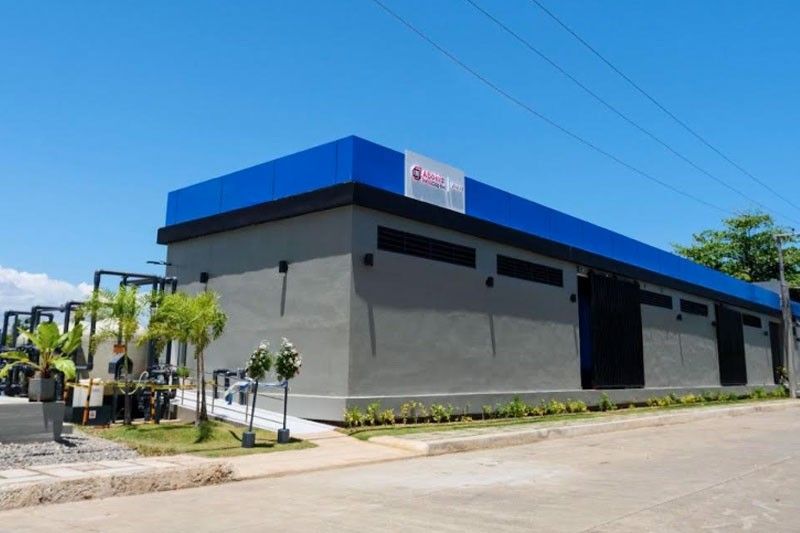
The MEZ2 facility and the Isla Mactan facility serve different arrangements and water sources. Their rated capacities should not be interpreted as a single pool of water automatically available to every household in Cebu. Distribution networks, supply agreements, and the needs of the areas served determine where the treated water can go.
Cebu province is also considering portable desalination machines
On October 15, 2026, BusinessMirror reported that the Cebu provincial government planned to procure two portable, solar-powered desalination machines as part of its El Niño preparedness measures. Each machine was estimated to cost around ₱8 million and was described as equipment that could convert seawater into potable water during emergencies.
The same report said the province was also planning to acquire eight additional water tankers. Officials described these measures as contingency plans in case existing sources become insufficient during prolonged dry conditions.
These portable units are a proposed procurement, not proof that two new machines are already operating. Their availability, actual output, deployment locations, and water-quality requirements will depend on procurement and implementation.
Source: BusinessMirror: Cebu prepares for El Niño.
Why desalination will not automatically end water shortages
Desalination can diversify water sources, especially in coastal and island communities. But several factors determine whether the technology can significantly reduce shortages for residents.
- Production capacity: A plant can only produce up to its actual operating output. A rated capacity is not necessarily the same as the volume being delivered every day.
- Distribution infrastructure: Treated water must be connected to pipelines, storage facilities, or delivery systems that can reach the communities that need it.
- Energy and operating costs: Reverse osmosis requires energy, maintenance, pretreatment, and replacement of equipment such as membranes. These costs affect long-term sustainability.
- Geographic coverage: A plant serving an industrial estate, airport, or particular part of Mactan does not automatically supply all of Cebu province.
- Environmental management: Facilities must manage concentrated brine and other waste streams responsibly to limit environmental impacts.
- Water-quality monitoring: The final product must be tested and treated as necessary before being distributed as drinking water.
These constraints do not mean desalination is ineffective. They explain why the technology works best as part of a broader water-security plan rather than as a standalone solution.
What this means for Cebuano households
For residents, the key question is not simply whether Cebu has a desalination plant. It is whether additional treated water can reach their specific community, how much supply is available, and whether the local water provider has a plan for prolonged dry conditions.
Households should follow advisories from their water district and local government, conserve water where possible, and avoid assuming that a new facility will immediately resolve interruptions or shortages in every barangay.
Public officials and water providers can help residents understand the benefits by sharing clear information on daily production, actual delivery volumes, areas served, emergency arrangements, water-quality testing, and the timeline for any planned expansion.
The bottom line
Cebu is already using desalination as part of its water-supply strategy. The Isla Mactan facility is contributing desalinated seawater to the MCWD network, while the MEZ2 facility treats brackish lagoon water for its service area. The provincial government has also announced plans for portable solar-powered machines to help during emergencies.
These projects can improve water resilience by adding sources that are less dependent on rainfall. However, their effect on household shortages depends on actual production, cost, infrastructure, distribution, and the speed at which planned measures are implemented.
Desalination can be an important part of Cebu’s response to El Niño, but reliable access to water still requires adequate capacity, effective distribution, responsible operations, and careful planning.
Sources and further reading
- Daily Tribune — Desalinated water reaches Cebu network
- BusinessMirror — Cebu City Vice Mayor Osmeña visits Vivant desalination plant in Cordova
- The Freeman / Philstar.com — Aboitiz desalination plant boosts MEZ2 water supply
- BusinessMirror — Cebu prepares for El Niño
Editorial note: Capacity figures in this article distinguish reported rated or planned capacity from initial supply volumes. The provincial government’s portable desalination machines are described as planned procurement, not as already operational equipment. Photographs are credited to their respective publishers and depict the facilities or equipment identified in their captions.