
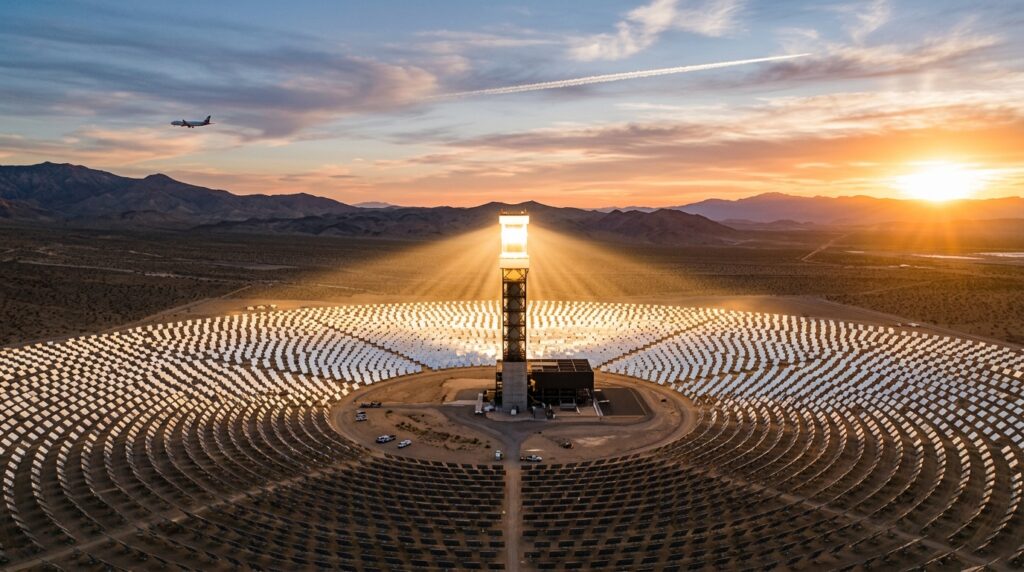
The global aviation industry has long been pinned down by a singular, unyielding constraint: its absolute dependence on fossil petroleum. While electric batteries have begun transforming passenger cars and regional transit, the immense energy density required to lift a commercial airliner into the sky demands liquid hydrocarbon fuel.
But a revolutionary leap in chemical engineering is about to rewrite the rules of global geopolitics.
Scientists have successfully demonstrated that it is possible to synthesize high-grade jet fuel utilizing only three infinite resources: sunlight, water, and ordinary air.
This process completely bypasses traditional oil drilling, turning the primary driver of climate change—atmospheric carbon dioxide—into the ultimate clean energy source.
Inside the Solar Fuel Tower
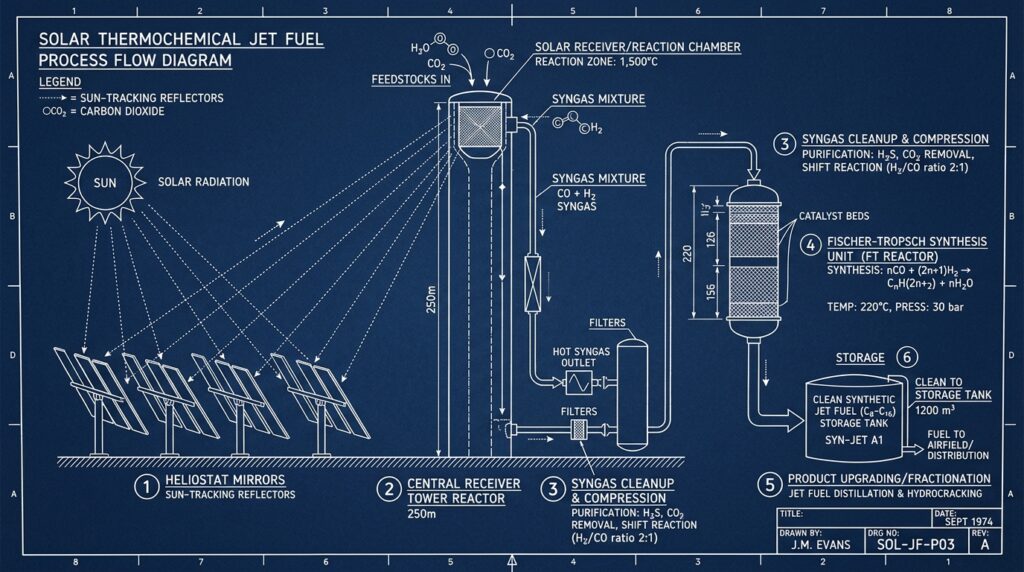
The mechanics behind this engineering milestone rely on a high-temperature solar thermochemical reactor. Sprawling fields of mirrors concentrate massive amounts of sunlight onto a singular tower, generating internal temperatures exceeding 1,500 degrees Celsius.
Inside this reactor, a specialized chemical cycle splits water vapor (H2O) and captured atmospheric carbon dioxide (CO2) down to their baseline elements.
This reaction yields a highly specific gas mixture known as syngas (synthetic gas), composed primarily of hydrogen and carbon monoxide. From there, the syngas is fed into an automated processing unit where it undergoes Fischer-Tropsch synthesis—the exact same chemical pathway used to structure traditional petroleum, but achieved cleanly from scratch without a single drop of crude oil.
Breaking the Drilling Monopoly
Why is the international energy sector investing billions into this carbon-neutral alternative? It comes down to supply chain security. Traditional petroleum infrastructure requires volatile geographical mining, shipping lanes, and heavy refinery networks. Synthetic aviation fuel (SAF), however, can be manufactured anywhere on earth where there is open land, water access, and sunlight.
According to energy industry registries, this technology creates a perfect circular economy:
- Carbon dioxide is pulled directly from the atmosphere to manufacture the synthetic fuel.
- The jet burns the fuel during flight, releasing that exact same carbon back into the sky.
- The net-emissions of the entire cycle sit at a flat zero, creating an infinite energy loop.

The Scale-Up Challenge
While the molecular physics of solar-derived fuel are flawless, the current bottleneck is industrial scaling. Building solar concentrator farms capable of matching the daily output of traditional oil refineries requires massive up-front infrastructure capital.
Currently, clean energy consortiums across North America, Europe, and Asia are racing to build the first commercial-scale synthetic fuel refineries.
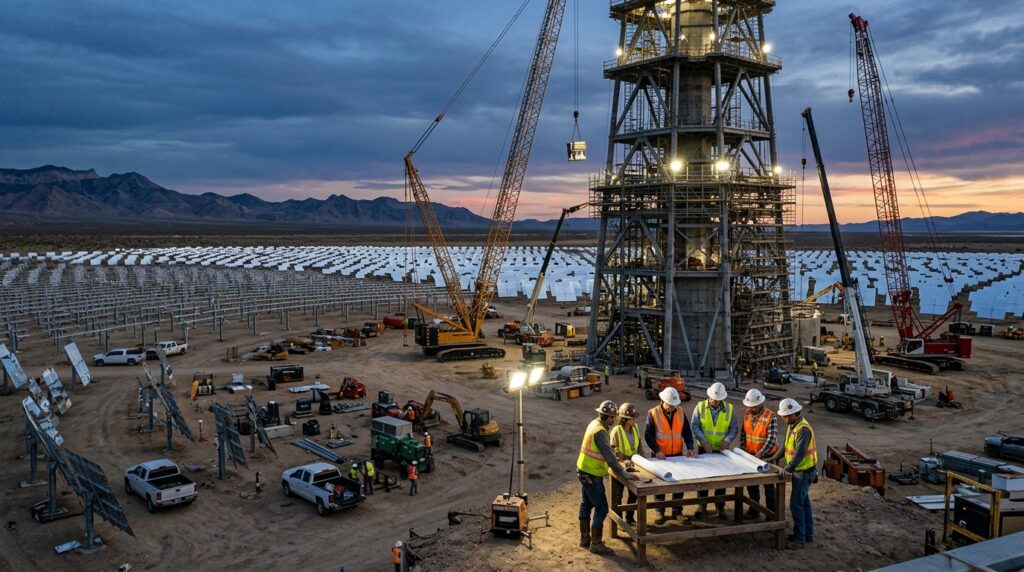
As regulatory frameworks tighten and aviation mandates require airlines to continuously reduce their carbon footprints, the groups that master the mass production of solar fuel stand to capture a dominant share of a multi-trillion-dollar transport market, proving that the future of energy isn’t buried underground—it is floating right above our heads.
Would you feel safer flying on a commercial airplane powered by fuel made from sunlight and thin air? Do you think synthetic fuels will completely kill off traditional oil drilling in our lifetime? Drop your city, state, or province below and let’s talk tech!